How AI Is Changing Daily Life — And Why Privacy Matters More Than Ever
Most people unknowingly share sensitive information with AI-powered platforms without understanding how that data may be stored or used. Businesses are also rushing into AI adoption without fully addressing governance, cybersecurity, and human oversight.
The real challenge is not whether AI is good or bad — it’s whether people use it responsibly.
Key takeaway:
Use AI as a tool, not as blind truth. Verify important information, protect personal data, stay alert to scams and deepfakes, and remember that convenience without awareness can quickly become risk.
Most people don’t realize how deeply artificial intelligence has entered everyday life.
You use it when:
AI is no longer a “technology industry” topic. It’s a public topic.
And while AI is bringing speed, convenience, automation, and smarter decisions, it’s also introducing something many people are not fully prepared for: AI real world risks.
The challenge is not whether AI is good or bad. The challenge is understanding where it helps, where it fails, and how ordinary people can protect themselves.
AI Is Already Everywhere
According to McKinsey’s global AI survey, 78% of organizations reported using AI in at least one business function, a sharp increase from previous years.The adoption is happening across industries.
The Good Side of AI (And Why People Love It)
Let’s be fair — AI has genuinely improved many parts of life.
Faster Services
Nobody enjoys waiting in long queues or sitting on hold with customer care. AI-powered systems can resolve simple issues instantly.
Better Fraud Detection
Banks can identify unusual transactions within seconds, helping reduce fraud and cybercrime.
Improved Healthcare Support
AI tools can assist doctors in identifying patterns that humans might miss, especially in scans and diagnostics.
Productivity and Automation
Businesses save time by automating repetitive work:
– Data entry
– Report generation
– Scheduling
– Documentation
– Customer support
McKinsey research suggests many organizations are already seeing measurable efficiency and cost benefits from AI use.
Accessibility
AI tools help people:
– Translate languages
– Convert speech to text
– Improve communication
– Access information quickly
For many users, AI genuinely feels magical.
Until something goes wrong.
The Real-World Risks Most People Ignore
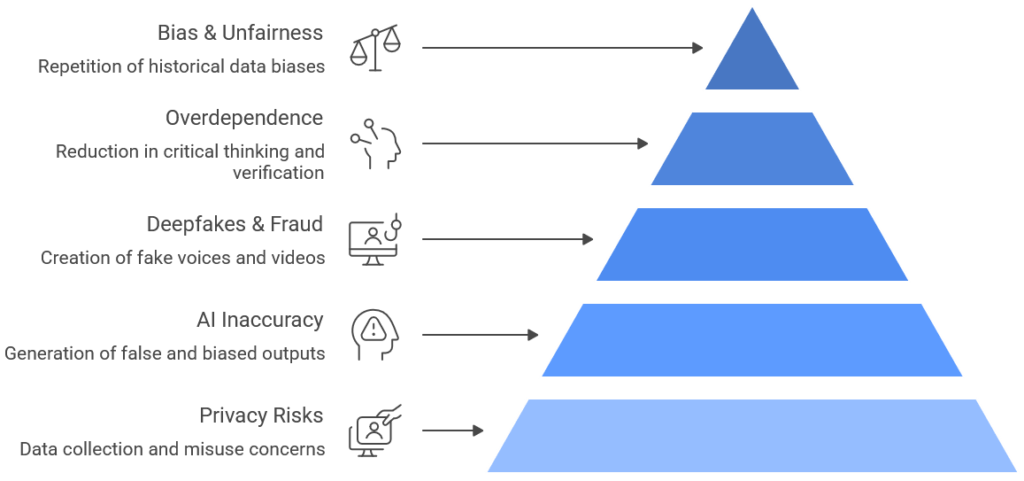
This is where the conversation becomes important. AI is powerful — but not always accurate, fair, or secure. And because AI often works invisibly, people trust it more than they should.The bigger concern is not just data collection — it’s data misuse.
Many users casually upload: …into AI tools without understanding where that information goes or how it may be stored.
That creates serious privacy and cybersecurity concerns.
A wrong medical suggestion is not.
Today, scammers can create: Imagine getting a call that sounds exactly like your family member asking for money urgently.
That is no longer science fiction.
If historical data contains bias, discrimination, or flawed patterns, AI may repeat them at scale.
This has already raised concerns in: Technology is not automatically neutral.
Practical Safeguards Every Common Person Should Follow
You do not need to become a cybersecurity expert to stay safer around AI. But you do need awareness.“Seeing is believing” no longer works.
Always verify unusual requests independently.
What Businesses Should Focus On
Businesses rushing into AI adoption should pause and ask:IBM notes that concerns around data accuracy, bias, and governance remain among the top AI adoption challenges.
Good AI implementation is not just about automation.
It is about governance, controls, accountability, and trust.
The Future Will Not Be “AI vs Humans”
The future is more likely to be:Humans using AI responsibly vs humans using it carelessly.
AI itself is not the real danger.
Blind trust is.
The smartest people and businesses will not be the ones using the most AI tools — they will be the ones using AI thoughtfully, securely, and responsibly.
Because in the real world, convenience without awareness often becomes risk.
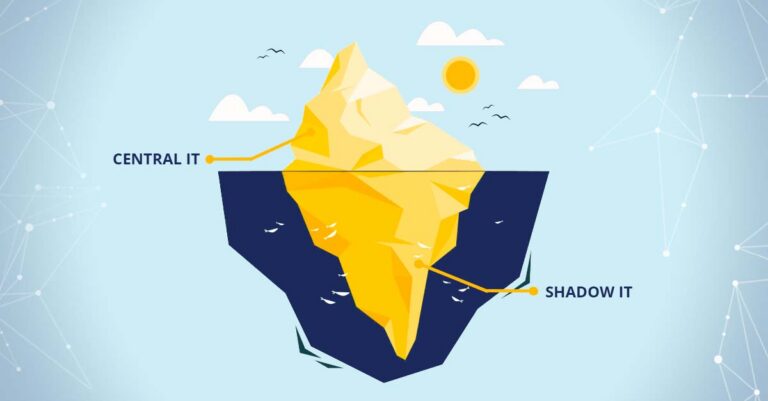
Read more about how Shadow IT & Shadow AI impacts businesses here.