Your Finance Team’s Biggest Cybersecurity Risk? That Random PDF Website
Your finance team may unknowingly expose sensitive company data every time they upload documents to random online PDF tools. What seems like a harmless “merge/compress PDF” task can become a serious security, privacy, and compliance risk — especially when financial statements, payroll data, invoices, tax records, or customer information are involved. The article highlights how Shadow IT and Shadow AI are quietly entering finance functions, often outside IT oversight. It also discusses practical risk mitigation measures such as approved tools, awareness programs, secure document workflows, and stronger governance to help organizations balance productivity with data security and compliance.
Your “free” tool may become the most expensive mistake your company ever makes.
Not because of licensing costs.
Because of where your confidential data ends up.
A finance team uploads Board Meeting minutes to a random “Free Online PDF Joiner.”
An HR executive merges salary revisions using a browser-based PDF editor.
An auditor uploads tax workings to an unknown OCR website.
Everything works perfectly.
Until one day, it doesn’t.
A Real Story from the Audit Trenches
During a systems walkthrough for a finance function, I asked a simple question:
“How do you compile the Board Meeting minutes before circulation?”
The response sounded harmless:
“We just use a free online PDF merger we found on Google.”
That single sentence immediately changed the risk profile of the entire process.
After tracing the platform, it became clear the website was hosted in a jurisdiction with virtually no meaningful data protection enforcement. Sensitive board discussions, executive compensation details, strategic decisions, and potentially M&A-related information were being uploaded to a third-party server outside organizational visibility.
No DPA.
No vendor due diligence.
No retention controls.
No audit trail.
No contractual accountability.
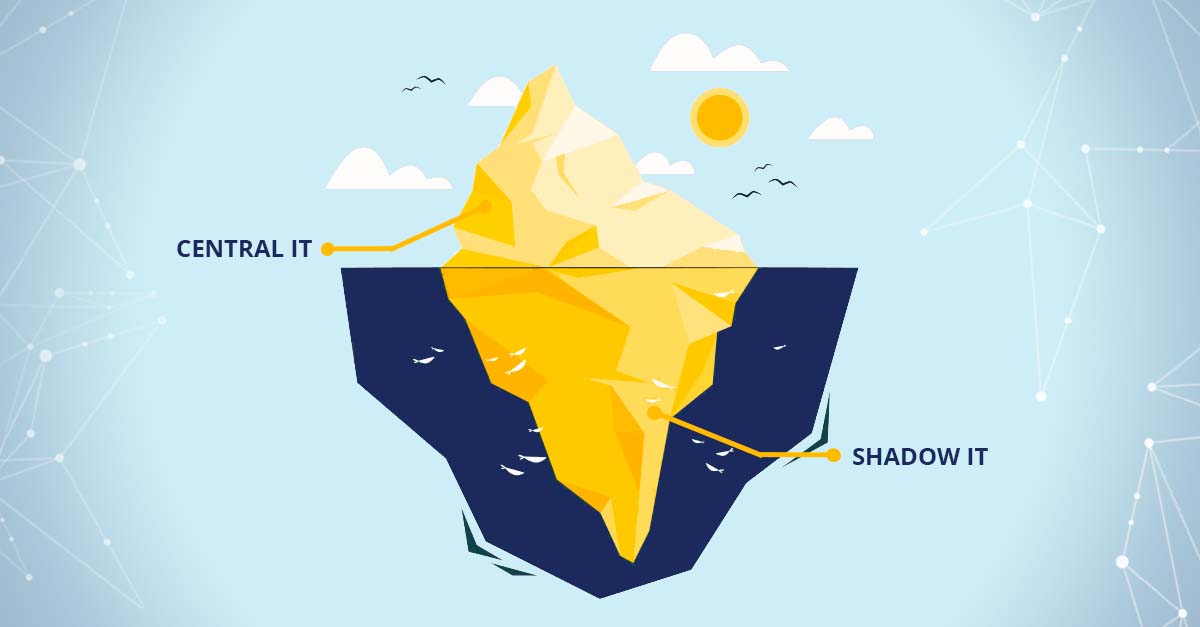
This is Shadow IT.
And it is everywhere.
What Is Shadow IT — And Why Is It Dangerous?
Shadow IT refers to employees using unauthorized technology, software, cloud services, or tools without formal approval from IT, compliance, or management teams.
In 2026, Shadow IT is no longer limited to employees installing random software.
It now includes:
– Free PDF tools
– AI summarizers and AI copilots
– Browser OCR websites
– File-sharing apps
– Personal Google Drives
– Unauthorized SaaS subscriptions
– Free transcription tools
– Browser extensions with excessive permissions
The problem is not productivity.
The problem is invisible data movement.
Why This Matters More Than Ever in 2026
Modern businesses are dealing with:
– Privacy regulations
– Vendor risk management
– Cyber insurance requirements
– SOX and internal control expectations
– Increasing ransomware threats
– AI-driven data harvesting
– Cross-border data transfer concerns
A single employee uploading confidential information to an unverified website can create:
– Privacy breaches
– Regulatory exposure
– Client trust damage
– Audit findings
– Contractual violations
– Reputational loss
For regulated industries like banking, insurance, healthcare, fintech, and listed entities, the consequences can become severe very quickly.
Even SMBs are now targets because attackers know smaller firms often lack mature security governance.
The Most Common Shadow IT Mistakes I See
“It’s Just a PDF Tool”
This is the biggest misconception. PDFs often contain:
– Financial statements
– PAN/GST details
– Client agreements
– Legal notices
– Board resolutions
– Payroll data
– Bank account details
Uploading them externally is not a “small” risk.
Assuming HTTPS Means Safe
Many teams believe:
“The website has a lock icon, so it’s secure.”
HTTPS only encrypts transmission.
It does not tell you:
What happens to your files afterward
Whether files are retained
Whether data is used for AI training
Whether administrators can access uploads
Whether logs are stored indefinitely
Ignoring Metadata Leakage
Even when document contents are hidden, metadata may expose:
– Internal usernames
– PC names
– Department details
– File paths
– Editing history
– Author information
This is frequently overlooked during audits.
Using Consumer AI Tools with Confidential Data
One emerging Shadow IT trend is employees pasting:
Financial reports
Internal SOPs
Client contracts
Source code
Risk assessments
…into public AI tools without understanding data retention policies.
This is becoming a major governance issue globally.
The Fix: Replacing Shadow IT with Self-Hosted Tools
I did not simply recommend:
“Please stop using free websites.”
That approach never works long term.
Users choose Shadow IT because official systems are usually slow, restrictive, or inconvenient.
The better strategy is:
Provide secure alternatives that are equally easy to use.
A practical example from our own office is this self hosted instance of Stirling PDF, accessible on pdf.yashgulecha.in.
Read more about how to mitigate shadow IT risks or feel free to walkthrough our self hosting experiments.